
United States Disposal Service provides 4-yard front-load dumpster service for mid-size Pennsylvania businesses: the neighborhood restaurant with a full dinner service, the professional office with a few dozen people on staff, the busy retail shop, the auto service bay or the small warehouse. The 4-yard is the usual mid-size container in the company’s lineup, and trash collection and recycling collection are both included in the rental agreement. This guide covers what the container includes, when a 4-yard is the right size, and the Pennsylvania rules that shape commercial waste service: Act 101 recycling, Act 90 hauler authorization, county waste plans, and the local rules in Philadelphia and Pittsburgh.
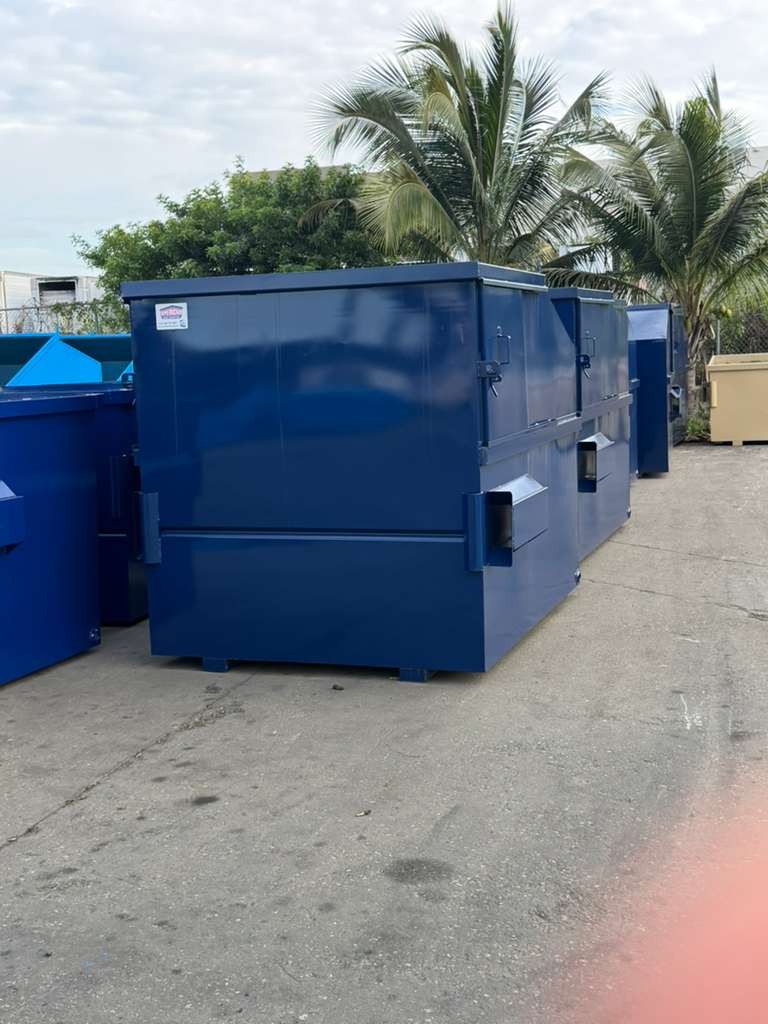
What a 4-yard front-load dumpster is and who uses one in Pennsylvania
The company’s front-load lineup is four sizes: 2, 4, 6 and 8 yards, with no off-menu sizes. The 4-yard sits in the middle. The Commercial Dumpster Rentals page describes it as the usual mid-size box, for a medium restaurant or a business with about 25 to 100 employees. The industry pages add more detail:
- The 4-yard is the container the company describes for a mid-size restaurant (Restaurant Dumpster Service).
- A small professional office, such as a few attorneys, a quiet accounting floor or a small agency, may be fine with a 2-yard or 4-yard on the weekly service that is already included (Office Dumpster Service).
- A boutique or service shop with light traffic may be comfortable with a 2-yard or 4-yard on a weekly visit (Retail and Strip Center Dumpster Service).
- A small dental practice (ordinary office trash only, not regulated medical waste), an independent garage or a workshop attached to a warehouse often starts at a 2-yard or 4-yard (Medical and Dental, Auto Shop, Warehouse and Industrial).
Headcount is only a starting point. It is more useful to know how often your current container is already full and whether the load is mostly dry cardboard, wet food waste or a mix. A Lancaster County furniture showroom that breaks down boxes all week and a Philadelphia lunch spot with wet waste every afternoon can have similar staff sizes and very different needs.
What is included with the rental
The container comes with a lid, which helps keep out rain, animals and odor. Every commercial dumpster rental includes weekly collection. If the box fills faster, pickup can go to two, three or four days a week, and daily collection is available. Frequency can also be reduced for a seasonal slowdown, with billing updated to match. On a permanent account the container stays on the property, and when the truck services it the trash is removed and the unit is cleaned.
A second container used only for recyclable material can be added, so cardboard does not use up the space in the trash box. In much of Pennsylvania it also helps meet recycling rules (see Act 101 below). What local outlets accept varies, so the team confirms it when quoting rather than publishing a checklist. See Commercial Recycling.
When a 4-yard is too small, or too big
If the lid will not close by pickup day, there are three fixes: more pickups on the same 4-yard, a separate recycling container for cardboard, or the next size up, the 6-yard or 8-yard. The Restaurant Dumpster Service page says that if the 4-yard is already being topped off between visits, the conversation can move to a 6-yard or 8-yard, or to the 35-yard self-contained compactor for a heavy wet stream. The Property Manager page makes the point that a bigger box that is still emptied too seldom will smell and overflow the same way, so for food waste a second weekly pickup is often the better answer. Changes are made by contacting the company.
Pad, enclosure and truck access
A front-load truck comes at the box from the front, engages it, raises it and sets it back in the same spot. Pad layout, the truck’s approach, overhead clearance, enclosure width and gate access all matter, and the team asks about them when quoting. Note any narrow alley, low overhang, slope, shared enclosure or locked gate when you call, and who plows the pad in winter. There is no published rate. Pricing is quoted for the address, the container and the pickup schedule.
Pennsylvania rules that affect commercial dumpster service
Pennsylvania sets statewide rules for recycling, waste planning and waste trucks, and municipalities add their own. Requirements differ from place to place, so check with your municipality and county before service starts.
Act 101: businesses in mandated municipalities must recycle
The Department of Environmental Protection’s Commercial Resources page says Act 101 of 1988 requires commercial, institutional and municipal establishments in Pennsylvania’s mandated municipalities to recycle high-grade office paper, corrugated paper, aluminum and leaf waste. They must also recycle any other materials in the municipality’s recycling ordinance or regulations, which may include glass, newsprint, plastics, and steel and bimetallic cans.
Under Section 1501 of Act 101, a municipality other than a county must run a recycling program if it has 10,000 or more people, or more than 5,000 but fewer than 10,000 people with a density above 300 people per square mile. Population is based on the most recent decennial census. The same section says a mandated municipality must exempt a business from its ordinance if the business has otherwise arranged to recycle the required materials, but to qualify the business must give the municipality written documentation of the total tons recycled every year. It also says a municipality does not have to collect recyclables from a business it is not already collecting trash from, as long as that business complies with the ordinance.
The practical takeaway: in a mandated municipality, a business with private trash service also needs its own recycling arrangement and records of what it recycled. Ask your hauler whether it can provide the tonnage figures your municipality asks for.
Act 90: the hauler’s trucks need DEP authorization
DEP’s Waste Transportation Safety Program page says the Waste Transportation Safety Act (Act 90 of 2002) requires waste trucks with a registered gross vehicle weight over 17,000 pounds, and trailers over 10,000 pounds, that carry municipal or residual waste to processing or disposal facilities in Pennsylvania to have a valid Waste Transporter Authorization. Facilities may not accept waste from vehicles without one, including vehicles with expired authorization stickers and cab cards. DEP reviews each applicant’s compliance history before issuing one. A front-load truck delivering to a Pennsylvania facility falls under it.
The authorization belongs to the hauler, not the customer. DEP’s page links to a complete list of authorizations, so you can check the company that will actually empty your container. The team tells you who services your address when it quotes.
County waste plans decide where the waste goes
Pennsylvania puts counties in charge of municipal waste planning. Under 25 Pa. Code § 272.201, a county municipal waste management plan exists to make sure each county has enough processing and disposal capacity for its municipal waste for at least 10 years and to ensure the maximum feasible waste reduction and recycling. DEP’s transportation program page adds that municipal waste disposal facilities and transporters must comply with county plans that specify which facilities are approved to receive waste from that county.
Philadelphia: private haulers, dumpster licenses and a recycling plan
The City of Philadelphia collects trash from eligible properties with six or fewer units, and properties with retail stores and professional offices can qualify, according to the Department of Sanitation’s trash and recycling rules; gas and service stations, auto repair and body shops, manufacturers and wholesalers are excluded. The City’s commercial trash fee page says eligible small commercial properties can choose City collection for a fee or hire a private hauler, and City collection is limited to no more than six 32-gallon cans or twelve bags of trash a week. A business that needs a 4-yard front-load container is well past that limit and uses a private hauler.
Philadelphia also licenses the dumpster itself. The Department of Licenses and Inspections’ dumpster license page says a business needs a Private Dumpster License to keep a dumpster on private property, with a separate fee for each dumpster and an RFID medallion attached to each one. Outdoor dumpsters must be enclosed by an opaque fence, shrubbery fence or enclosed shed, and the application must include a plot plan and a Waste Hauler Form naming every hauler. L&I’s medallion FAQ (revised October 2025) lists a lifetime private license fee of $150 for a trash dumpster of one cubic yard or more and $75 for a recycling dumpster of that size, and says to notify L&I immediately if you change hauling companies. Dumpsters on the street or sidewalk need a separate, annual Public Dumpster License.
Every Philadelphia business also needs a Commercial Waste & Recycling Plan. The City’s compliance forms page says the plan is filed when a business opens and updated within 30 days of any change, and that properties using private haulers also file an annual Act 101 compliance report (FM-11). Both are filed on the City’s Commercial Waste & Recycling Portal using your Commercial Activity License number.
Pittsburgh: the City does not collect from businesses
Pittsburgh’s waste and recycling code, Chapter 619, says recycling is mandatory in the city under Act 101 and that the City does not act as a collector for municipal waste and recyclables from commercial establishments. Businesses, institutions, apartment buildings with more than five units and other properties the City does not serve must hire a private collector, and they must keep records of the collector’s name and address and the annual tonnage collected. Businesses must store trash and recycling separately in durable, watertight containers with close-fitting lids, keep dumpsters at least 30 feet from residentially zoned property, and label each dumpster with the establishment’s name or address. Private collectors may not work in or near residential zoning districts between 10 p.m. and 6 a.m. The code lists an initial fine of $1,000 for a commercial establishment.
The City’s Bureau of Environmental Services says on its commercial recycling page that every Pittsburgh business must recycle at least three types of material, from mixed paper and cardboard, aluminum and steel cans, plastics, glass and organic yard waste, and must report recycling tonnage to the City’s Recycling Division quarterly or yearly. Private haulers can report on their clients’ behalf.
Everywhere else: check your municipality
Outside Philadelphia and Pittsburgh, local rules vary by city, borough, township and county. Before you sign up, ask your municipal office whether it requires a hauler license or registration, a dumpster permit or enclosure, or an annual recycling report, and ask your county recycling coordinator about county rules.
Working with brokers, property managers and multi-site accounts
United States Disposal Service works well with brokers. Its Service Brokers page describes a team dedicated to broker relations that handles account questions, scheduled services, service plan management and pricing. A business with stores in Philadelphia, Harrisburg and Erie, or a property manager with buildings in several counties, can put the locations on one account; see Nationwide Accounts.
How to request a 4-yard front-load dumpster in Pennsylvania
United States Disposal Service is headquartered at 16150 N. Main St., Jacksonville, Florida. It arranges commercial service nationwide from that office, working with trusted local contractors who run the trucks. This post does not claim a Pennsylvania office, a DEP authorization, or any Pennsylvania municipal license, contract or exclusive hauling rights for United States Disposal Service. For a 4-yard container, a recycling container or a broker account, contact John:
- Email: [email protected]
- Phone: 904-305-7534
Have the service address and municipality ready, along with the type of business, what goes in the box, how often your current container fills, whether you already have recycling service and where the new container will sit. You can also start a request on the Order Now page. This post does not promise a price, a start date or a specific pickup day.
Frequently asked questions
1. Who is a 4-yard front-load dumpster for?
The company describes the 4-yard as its usual mid-size box, for a medium restaurant or a business with about 25 to 100 employees. Its industry pages also name small offices, dental practices, light-traffic shops, independent garages and modest clubhouses as businesses that may fit a 2-yard or 4-yard.
2. What comes with a 4-yard rental?
A lidded container, with trash and recycling collection included in the rental agreement and weekly pickup as the baseline. A separate recycling container can be added. When the truck services a permanent container, it is emptied and cleaned. Pricing is quoted per property.
3. Do Pennsylvania businesses have to recycle?
In Act 101 mandated municipalities, yes. DEP says businesses there must recycle high-grade office paper, corrugated paper, aluminum and leaf waste, plus any other materials in the local ordinance. Ask your municipality which materials it requires.
4. How do I know if my municipality is mandated under Act 101?
It covers municipalities with 10,000 or more people, and those with more than 5,000 people and over 300 people per square mile. Your municipal office can confirm it.
5. What is an Act 90 sticker?
It shows that DEP has issued a Waste Transporter Authorization for the truck. Waste trucks over 17,000 pounds registered gross weight that deliver municipal or residual waste to Pennsylvania facilities need one, and facilities may not accept loads from trucks without a valid authorization. See DEP’s Waste Transportation Safety Program.
6. Will the City of Philadelphia pick up a 4-yard dumpster?
No. City collection for small commercial properties is limited to six 32-gallon cans or twelve bags of trash a week. With a private hauler, Philadelphia requires a dumpster license and an RFID medallion for each dumpster, plus a Commercial Waste & Recycling Plan. See L&I’s dumpster license page.
7. Does the City of Pittsburgh collect business trash?
No. Pittsburgh’s Chapter 619 says commercial establishments must hire a private collector, store trash and recycling in separate lidded containers and label dumpsters with the business name or address.
8. What if my 4-yard keeps overflowing?
Add pickups (two, three or four days a week, or daily), add a recycling container for cardboard, or move up to a 6-yard or 8-yard. Call to make the change, and billing is updated.
9. How do I get a quote for a 4-yard front-load dumpster in Pennsylvania?
Email [email protected] or call 904-305-7534 with the service address and municipality, business type, what you throw away, how often your current container fills, your current recycling setup and where the box will sit. You can also start at Order Now.
Follow United States Disposal Service on LinkedIn for service updates, and see more posts in the Newsroom.