
Permanent Roll-Off Dumpster Service for Businesses
Some businesses make more waste than a front-load dumpster can hold, and they make it every week, not just during a one-time project. A factory trims offcuts all day. A carpet store strips and bundles flooring. A distribution building breaks down pallets and bulky packaging. For those places, the answer is a permanent roll-off dumpster: a large, open-top container that stays on site at your business and is hauled, emptied and returned on a schedule that fits your production.
United States Disposal Service provides permanent roll-off service nationwide. This page explains how it works, how to decide between a roll-off, a front-load dumpster and a compactor, what your site needs, and how the pickup schedule is set. To get pricing, call (855) 514-0570 or request a quote online.
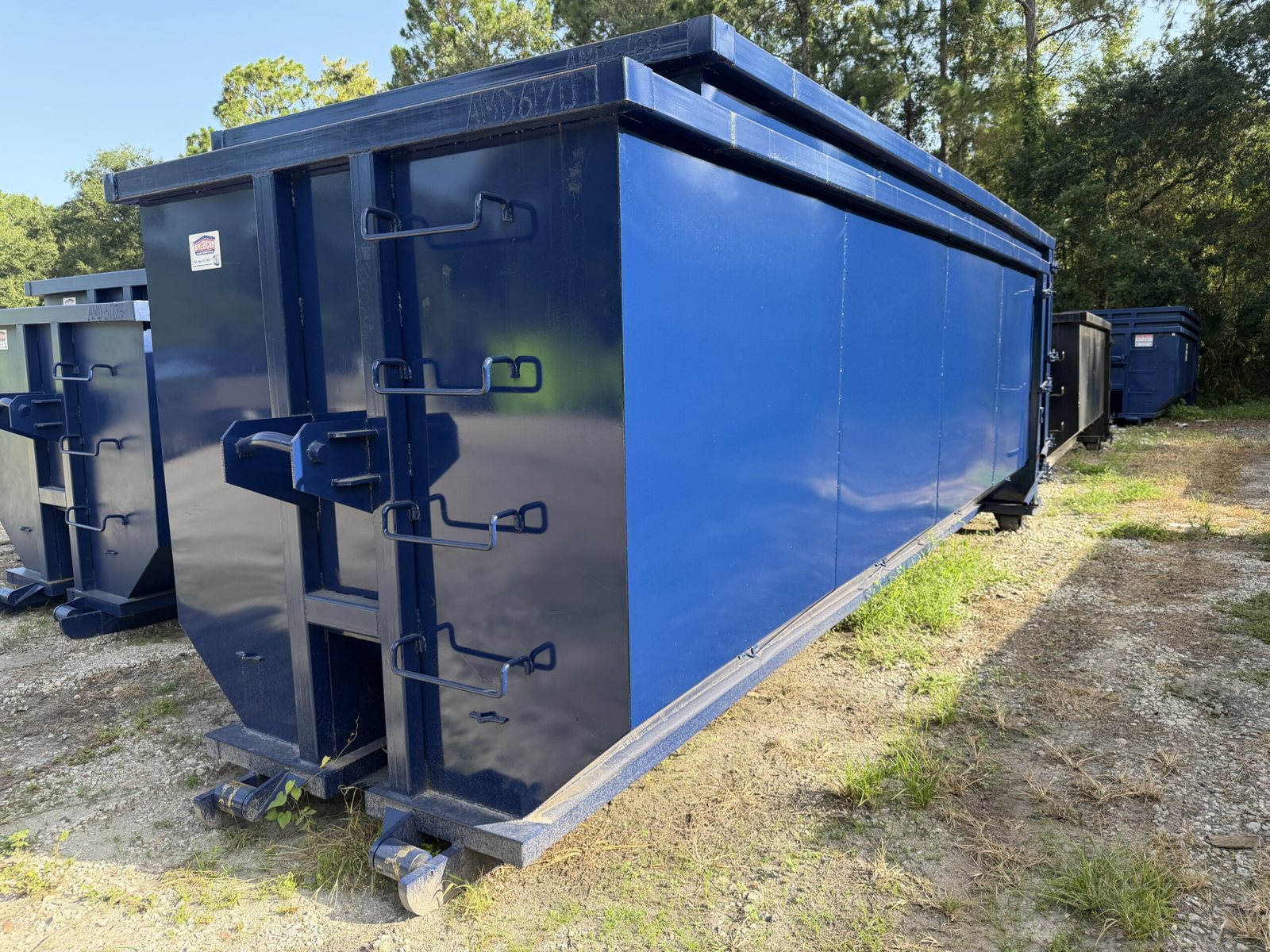
What "permanent" roll-off service means
A roll-off is a rectangular, open-top steel container with a hook or cable system that lets a roll-off truck slide it on and off its frame. In ordinary use, a roll-off is dropped at a job site, filled over a few days and taken away. Permanent service is different: the roll-off is placed at your business and stays there. When it is full, the truck arrives, takes the full container, leaves an empty one in its place or empties and returns the same one, and your operation keeps moving.
This page is for permanent, on-site service at places of business. It is not a short-term project rental. If your waste is steady and you want a standing container for it, you are in the right place.
Who permanent roll-offs are for
Permanent roll-offs fit businesses that produce bulky, heavy or high-volume waste that does not suit a lidded front-load box:
- Factories and manufacturing plants with production scrap, trim, packaging and shipping waste
- Carpet and flooring stores that remove and bundle old flooring, padding and packaging
- Warehouses and distribution centers with broken pallets, crating and bulky cartons (see warehouse and light industrial service)
- Furniture, appliance and building-supply retailers with large packaging and returns
- Property-management maintenance yards that collect bulky material from many buildings (see property manager service)
- Any business where a front-load box is full long before the pickup day because the material is too large or too heavy
If your waste is mostly ordinary bagged trash, a front-load dumpster is usually the better and less expensive fit. If you generate steady loads that compress, such as cardboard or packaging, a compactor can reduce how often the truck needs to come.
Roll-off, front-load or compactor: how to choose
- Choose a permanent roll-off when the material is bulky, long, heavy or loaded by forklift or loader, when you need a large open opening to load, or when the volume is far beyond a 6 or 8 yard front-load box.
- Choose a front-load dumpster when your waste is ordinary commercial trash that goes in by hand and you want a lidded container on a repeating route.
- Choose a compactor when the waste will compress and you want fewer hauls from a smaller footprint. A breakaway (stationary) compactor is also hauled by a roll-off truck, so the pad and access needs are similar.
Many sites use two: a front-load box for the break room and office trash and a roll-off for production or bulk material. We will help you sort that out when you call.
Sizes
Our roll-off lineup runs from 10 to 40 yard. For permanent placement, the right size depends on what you throw away, how much space your pad allows and how fast the container fills. A larger container means fewer hauls but needs more room and a heavier load per pull, while a smaller container is easier to place and more flexible on schedule. We confirm which sizes are available for your site when quoting. Tell us what the material is, how often you would expect to fill it and whether it is loaded by hand, forklift or loader, and we will recommend a container.
Placement, pad and truck access
A roll-off truck is a big vehicle and needs room to work. Before delivery we ask about:
- A firm, level pad that can carry a loaded container and a heavy truck. Gravel or asphalt that is soft, sloped or breaking up causes trouble.
- Length and width of the spot. A roll-off is long, and the truck needs extra room beyond the container to slide it on and off.
- Overhead clearance. Wires, tree limbs and building overhangs matter more than people expect when the container tilts during loading.
- Approach and turning room. The driver needs a way in and out that does not require blocking a public road or a fire lane.
- Loading side. If you load with a forklift or loader, tell us which side and whether you want a door at the rear.
- Gates and locks. Who can open them and when.
- Local rules. Your property, landlord or municipality may have placement rules. We cover what we know when quoting, and you should confirm anything specific to your site with the property owner.
Pickup schedule
Permanent service is set up around your production, not a calendar for its own sake. Depending on the site, pickups can follow a recurring schedule, or the container can be hauled as it fills, with pickup arranged by a call. A warehouse that breaks down inventory on Fridays will want something different from a plant that fills a container every other day. Schedule options for your location are confirmed when quoting, and frequency can be adjusted if your volume changes.
Whichever pattern fits, the goal is the same: the container is never overflowing, and you are never paying for a haul of a container that is half empty.
What goes in a roll-off, and what does not
Roll-offs are best for dry commercial waste in bulk: production scrap, wood, pallets, flooring, packaging and similar. Hazardous materials, liquids, batteries, tires and regulated waste are not accepted in a standard commercial roll-off, and some jurisdictions have extra rules for particular materials. Tell us what you plan to put in, and we will confirm what is acceptable for your location when quoting.
Recycling with a roll-off
A roll-off can be used for a single material stream, such as clean cardboard, so recyclable material stays separate from trash. Whether that makes sense depends on the volume and on local outlets for the material. Read more on commercial recycling.
Nationwide service
We serve the entire United States. See the state map or Locations for your state. Because we also work with waste brokers and national service partners, we can often help in hard-to-serve areas, including franchise markets where provider options are limited. For multi-location businesses, ask about one account, one contract and one monthly invoice.
Frequently asked questions
What is a permanent roll-off dumpster?
A roll-off container that stays on site at your business and is serviced on a regular basis, instead of being delivered for a one-time project and taken away.
Is this the same as a temporary roll-off rental?
No. This is standing service at a place of business. If you need a one-time cleanout, call and we will tell you whether we are the right fit.
What sizes are available?
Our roll-off lineup runs from 10 to 40 yard. We confirm the sizes that suit your site and your waste when quoting.
How often will the container be hauled?
It depends on the site. Pickups can follow a recurring schedule or be arranged as the container fills. We confirm the options for your location when quoting.
What can I put in a roll-off?
Dry commercial waste such as production scrap, wood, pallets, flooring and packaging. Hazardous materials, liquids, batteries, tires and regulated waste are not accepted. Tell us what you throw away and we will confirm.
Do I need a permit or permission to place a roll-off?
It depends on your property and local rules. A container on private business property usually needs only the property owner's permission, but rules vary, so check with your landlord or municipality. We can talk through what we know when quoting.
Do you publish prices?
No. Pricing depends on size, location, haul frequency and material, so we confirm it when quoting.
Can you cover areas with limited provider options?
Often, yes. We work with waste brokers and national service partners to reach hard-to-serve areas, including franchise markets.
Get a quote for permanent roll-off service
Call (855) 514-0570 or request a quote online. You may also want front-load dumpsters, compactors or commercial recycling. Existing customers can use Contact.